The Silenced Majority
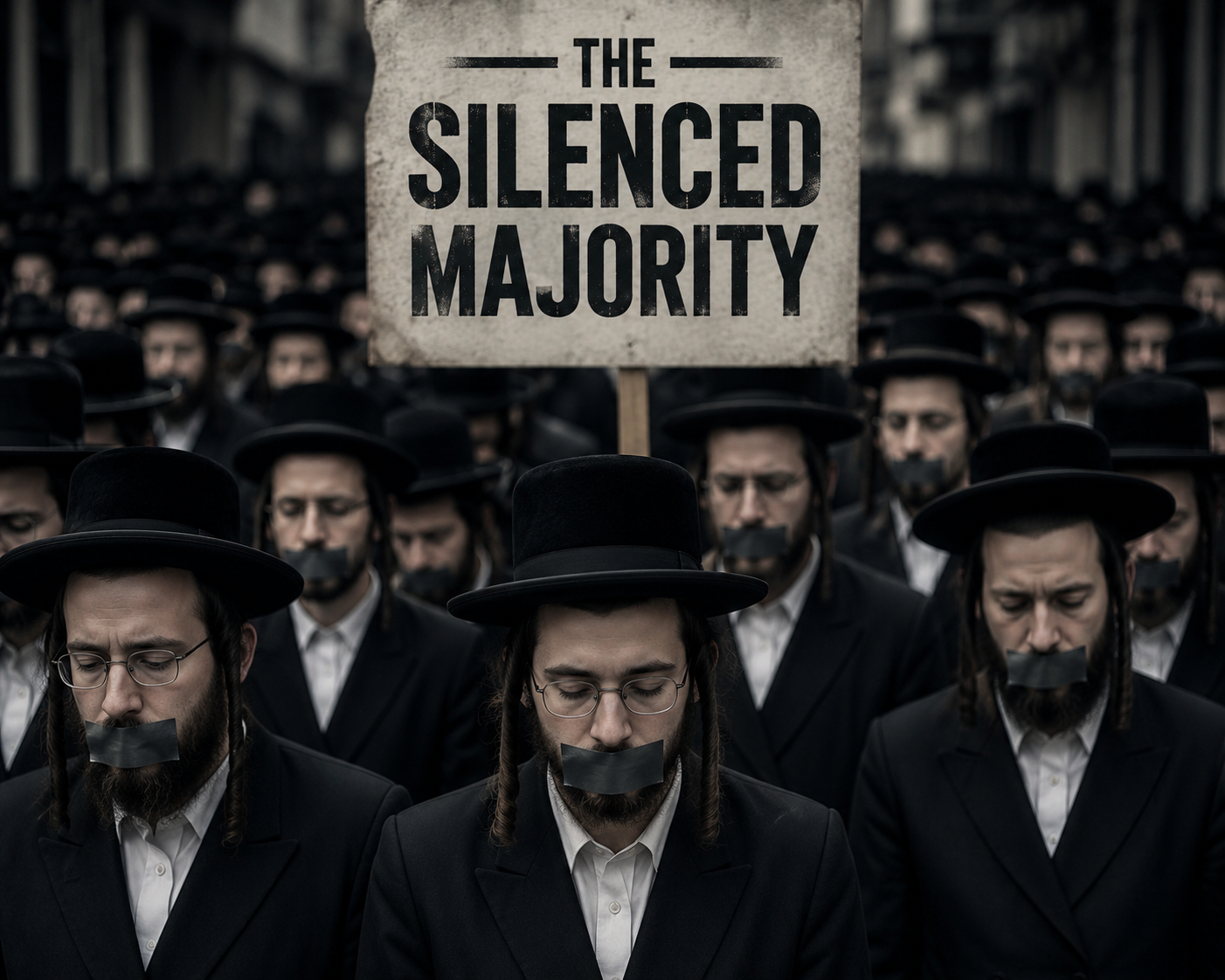
There is a claim that surfaces regularly in debates about Israel and Jewish identity.
When Jewish critics of Zionism speak up — when rabbis, scholars, or ordinary Jews express opposition to the idea that Israel represents all Jews — Zionist commentators often respond with a dismissive wave of the hand. These people, the argument goes, are a fringe. A negligible minority. An eccentric footnote to an otherwise united Jewish consensus.
It is a confident claim. It is also almost entirely false.
And it gets history precisely backwards.
When Zionism began and for many decades after, it was Zionism that was the fringe position. When Theodor Herzl launched the modern Zionist movement in the late nineteenth century, the overwhelming majority of world Jewry opposed him, ignored him, or regarded his project with a mixture of bewilderment and alarm. Orthodox leadership across Europe rejected Zionism as a theological error and a practical danger. Reform leadership rejected it as a contradiction of their vision of Jews as citizens of their own nations. Secular Jewish intellectuals and communal leaders rejected it as a political fantasy that would endanger Jewish communities everywhere.
If someone had stood up at a gathering of Jewish leaders in 1900 and declared that Zionists were a negligible fringe, they would have been stating the obvious.
The opponents of Zionism were not obscure figures clutching minority opinions at the edges of Jewish life. They were its most towering authorities.
The Chofetz Chaim, the Brisker Rav, the Chazon Ish, Rabbi Elchonon Wasserman, Rabbi Elazar Shach, Rabbi Yosef Shalom Elyashiv. These are not minor names. These are figures regarded by enormous segments of the Orthodox world as the defining rabbinic voices of the twentieth century. To describe their opposition to Zionism as fringe is not merely historically inaccurate. It requires dismissing the most respected Jewish legal and religious minds of the modern era as peripheral to Jewish life. These were not fringe voices. They were the establishment.
What is particularly striking is that opposition to Zionism was never confined to one corner of Jewish life. It emerged simultaneously from the most traditionally Orthodox, from the Reform movement, and from secular Jewish intellectuals and communal leaders. When people spanning the entire spectrum of Jewish religious and political life converge on the same position, it is almost by definition not a fringe position.
The early Reform movement deserves particular attention here, because Reform Judaism is today often associated with strong support for Israel. That association is historically recent. The Pittsburgh Platform of 1885 — one of the founding documents of American Reform Judaism — explicitly rejected the idea of Jews as a political nation. The Central Conference of American Rabbis voted repeatedly against Zionism in the early twentieth century. Reform leadership viewed Zionism as fundamentally incompatible with their vision of Jews as loyal and equal citizens of the countries in which they lived. The Reform movement's eventual embrace of Zionism came decades later, shaped by specific historical events, and represented a significant departure from its original principles.
The "fringe" label, then, requires explaining why the official position of Reform Judaism for its first several decades was fringe within Reform Judaism.
There is also a logical problem with the argument that deserves to be named directly.
When Zionists claim that anti-Zionist Jews are marginal, they often rely on a definition that makes the conclusion inevitable. If Zionism is defined as an essential component of Jewish identity — if supporting Israel is treated as what being Jewish means — then Jews who reject Zionism are, by that definition, not fully expressing their Jewish identity and can be conveniently discounted. But that definition of Jewish identity is itself the Zionist claim that is being disputed. You cannot prove that Zionism represents mainstream Judaism by first defining Judaism as requiring Zionism. That argument is obviously circular.
Today, the non-Zionist and anti-Zionist Orthodox community is not a rounding error. The Haredi world, which contains a substantial non-Zionist and in many cases explicitly anti-Zionist population, is among the fastest-growing segments of Jewish life in both Israel and the diaspora. Satmar alone is one of the largest Hasidic movements in the world. The communities affiliated with Agudath Israel, while not uniformly anti-Zionist, have historically maintained a careful distance from Zionist ideology. When these communities are added together, the numbers are significant and growing.
Finally, there is the question of institutions versus people.
Zionism has been extraordinarily effective at capturing the major institutions of Jewish organizational life — the large federations, the prominent publications, the well-funded advocacy organizations. But controlling institutions is not the same thing as representing a majority. The fact that most large Jewish organizations take a pro-Israel position tells us something about how political power operates within organized Jewish life. It does not tell us that every Jew who writes a check to a Jewish federation or attends a Jewish community event has personally endorsed Zionist ideology.
The history of Jewish opposition to Zionism is not a footnote. It is actually the main story.
When someone dismisses anti-Zionist Jews as a negligible fringe, they are not describing the historical record. They are describing what is convenient for their argument.
Those are two very different things.
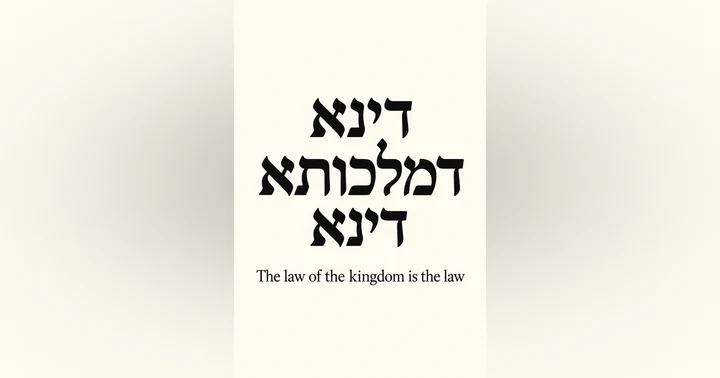
The Law of the Land Is the Law