Why Zionism Needed to Hijack Judaism—and Still Does
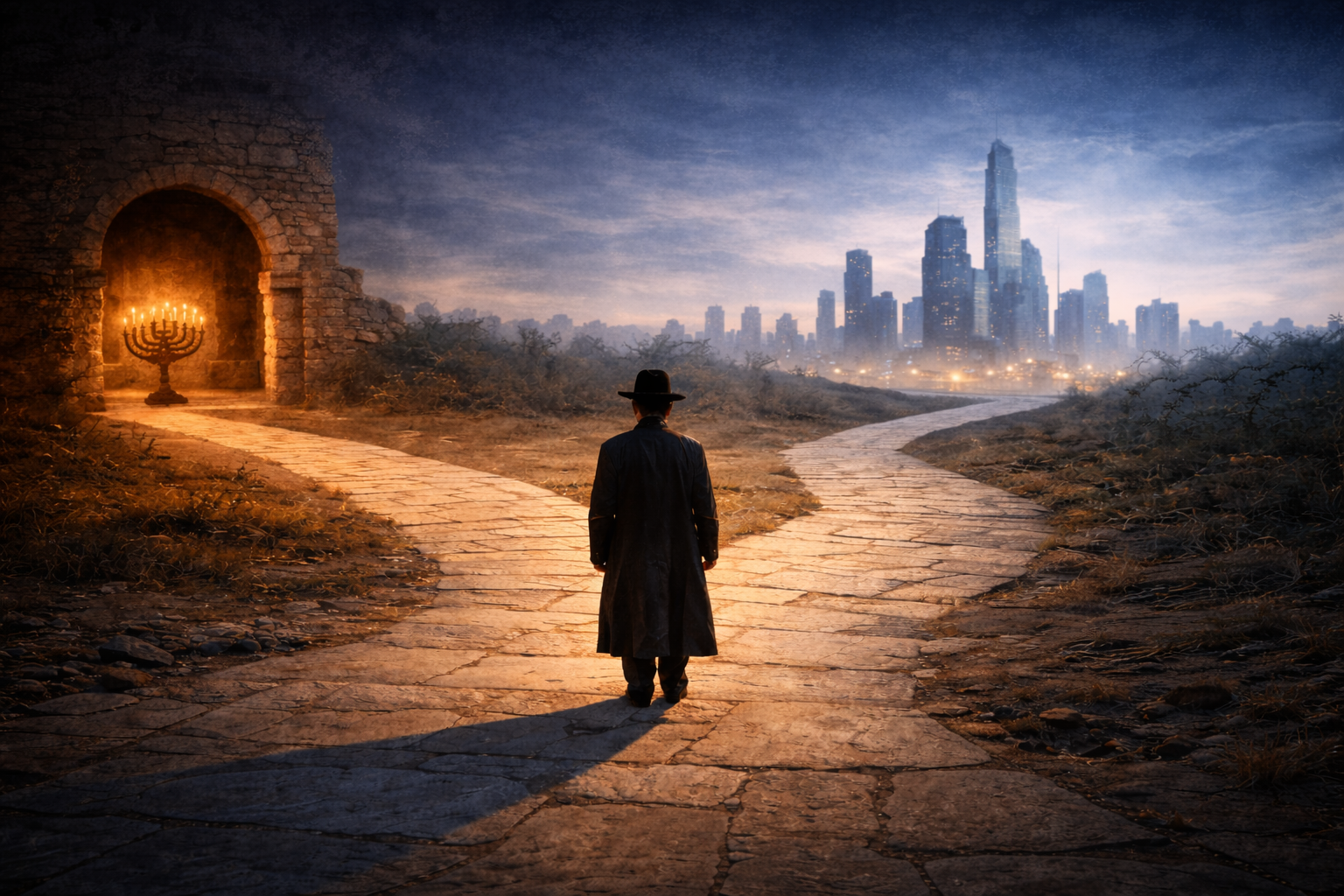
When most Orthodox Jews think of Zionism today, they tend to picture a political movement that supports Jewish safety, combats antisemitism, and enables a flourishing community in Eretz Yisroel. What many don’t realize is that Zionism was never intended as a refuge from persecution. It was an ideological revolution—one that could not succeed unless it co-opted Judaism itself, redefining who the Jews are, what Judaism means, and how Jews relate to one another and to Hashem.
This may sound extreme, but it is not an exaggeration. It is a matter of historical record, carefully documented by gedolei Yisroel and by the Zionists themselves. Yet today, this truth is largely unknown—even among well-meaning frum Jews—because for over a century, Zionism has relied on blurring the line between Judaism and Jewish nationalism.
That confusion didn’t happen by accident. It was by design.
The Identity Crisis That Birthed Zionism
Zionism arose in the late 19th century, during a time of deep crisis for many European Jews. Over the course of the 1800s, large segments of European Jewry had abandoned Torah observance, hoping that assimilation into non-Jewish society would solve the “Jewish problem.” They believed that if Jews dressed like non-Jews, spoke their language, served in their armies, and abandoned their unique customs, antisemitism would disappear.
But Hashem had other plans.
A wave of violent pogroms in Russia shattered those hopes. In France, the Dreyfus affair exposed the depth of antisemitic hatred even in the so-called "enlightened" West. The Jews were not being accepted. They were being hunted. And for the assimilated Jews, who had already rejected Torah as their identity, this posed a terrifying question: If we are not part of the gentile world—and we are not part of the Torah world (because we rejected and continue to reject it)—then what are we?
This was the vacuum that Zionism sought to fill.
Zionism's Bold New Proposition
Out of this identity crisis came a revolutionary idea: Jews are not just a religion. They are a nation—a secular nation, like the French or the Germans. They need a land, a flag, an army, a national anthem, and pride. In this new model, Jewishness was not about the bris of Avraham or kabalas haTorah at Har Sinai. It was about culture, language, and territory.
But there was a problem. The Jewish people already were a nation—defined not by land or race, but by the Torah. Klal Yisroel existed as a people before it ever entered Eretz Yisroel. We were chosen at Har Sinai, not in Tel Aviv. Our covenant was with Hashem, not with the United Nations.
For Zionism to succeed, it couldn’t simply add nationalism on top of Judaism. It had to replace it.
Why Judaism Had to Be Replaced
The early Zionists weren’t content to build a state for Jews as they were. They believed that the traditional Jewish identity—defined by Torah, mitzvos, and submission to Hashem—was precisely the obstacle preventing Jews from becoming a “normal” nation among nations. To them, Judaism was the problem. It symbolized exile, weakness, and dependence on Hashem rather than human power. So the goal was not to destroy Judaism as a side effect of building a state. The state was the tool they needed in order to destroy Judaism—by replacing it with a secular nationalist identity. As Rav Chaim Brisker put it: “The Zionists did not want to destroy Judaism in order to create a state—they wanted a state in order to destroy Judaism.”
That might sound like hyperbole, but the Zionists said it openly.
What the Zionists Said Themselves
Max Nordau, one of Herzl’s closest allies, didn’t just want a Jewish homeland—he wanted a new kind of Jew. At the Second Zionist Congress in 1898, he introduced the concept of “Muscle Judaism,” calling on Jewish youth to rehabilitate what he described as their deviant physical and mental state. To Nordau and others, the Torah Jew—the modest, gentle, scholarly Jew—was a weakness to be overcome, not a legacy to be preserved. The Zionist mission was not merely political. It was anthropological. They wanted to remake the Jew.
Ze’ev Jabotinsky, one of the leading Zionist thinkers, believed that “Diaspora Judaism”—rooted in Torah and humility—had created a weak and degraded Jew. He derided its values and glorified physical strength and militarism, promoting the ideal of a “new Jew” who would replace the old religious identity with a secular, nationalist one.
Even Herzl himself, in his diary, expressed admiration for antisemitic leaders—not because he agreed with their hatred, but because he believed it would force Jews to adopt his nationalist solution. To Herzl, antisemitism was not a tragedy to be defeated—it was a tool to be exploited.
The Strategy: Redefine Everything
To accomplish their goal, the Zionists couldn’t just attack Judaism head-on. That would have turned the masses against them. Instead, they chose a more effective route: co-opt the terms, symbols, and language of Judaism—and give them new, secular meanings.
Hebrew was reborn as a national language, stripped of its kedushah. Cities and streets would be named after Tanach figures, not to honor their righteousness, but to provide nationalist legitimacy. The menorah, the shofar, the Israeli flag—all were selected or redesigned to echo Jewish holiness while pushing a completely different worldview.
They even created a new calendar of “Jewish” holidays: Yom Ha’atzmaut, Yom Hazikaron, Yom Yerushalayim—each modeled after the structure of Torah Yomim Tovim, but carrying entirely secular or military themes.
Most damaging of all, they positioned the State of Israel as the representative of world Jewry. From the UN podium to CNN interviews, Israeli leaders began to speak “on behalf of the Jewish people”—without Torah, without a Sanhedrin, and without the slightest connection to the halachic definition of Am Yisroel.
Redemption Without Moshiach
Perhaps the most radical Zionist innovation was the claim that their political state was a form of redemption. Throughout Jewish history, Geulah was always understood to be a Divine process, initiated by Hashem and fulfilled through the coming of Moshiach, not by human political maneuvering. The Zionists turned this on its head, declaring their secular state the beginning of Jewish redemption—a concept completely alien to Torah and mesorah.
Gedolei Yisroel spoke out forcefully against this idea. Rav Elchonon Wasserman, zt”l, called Zionism a form of avodah zarah, and warned that its religious variant—Religious Zionism—was even more dangerous because it mixed false ideology with the Torah. He described the Zionist state as a new galus that would be mistaken for redemption.
Rav Shach, zt”l, warned that Zionist ideology became so deeply embedded in Jewish consciousness that even Torah-observant Jews—including talmidei chachamim—mistook its heretical ideas for authentic Torah hashkafah. He lamented that many had come to believe that military strength, nationalism, and political sovereignty were inherent Torah values, when in reality, these were entirely foreign concepts, imported from secular Zionist thinking.
These gedolim, and many others, warned us that the very framework through which Jews understand their identity, their mission, and their future had been distorted.
Zionism Was Never About Saving Jews
One of the most painful chapters in this history is how Zionist leaders responded during the Holocaust. The leaders of the Zionist movement prioritized their political goals over the immediate rescue of Jews—particularly when rescue did not align with their plan to bring Jews to Palestine.
In 1938, on the eve of the Evian Conference, David Ben-Gurion warned that publicizing the plight of European Jews could harm Zionist interests. He said outright that the more the world focused on Jewish suffering, the more damage it would cause to the Zionist agenda. Saving Jews was important only if it advanced the goal of Jewish statehood. If rescue meant bringing Jews elsewhere, the Zionists obstructed it.
This was not just rhetoric. Zionist officials downplayed rescue efforts that didn’t involve aliyah and discouraged international initiatives that might have diverted Jews to safer lands outside of Eretz Yisroel. Even after the war, Ben-Gurion admitted that his main concern during the Holocaust years was not saving Jews per se, but using the tragedy to advance the cause of the state.
Eliezer Livneh, one of the Zionist insiders, later reflected candidly: “Even during the Holocaust we followed these ideals… Everything else, including rescuing the Jews of Europe, we viewed as secondary.”
This ideology cost countless lives. It also revealed the heart of the Zionist enterprise: not to save Jews as Jews, but to recast them as citizens of a nationalist movement. And if that meant sacrificing part of the Jewish people to secure political gain for the rest, Zionist leaders were prepared to make that trade.
Religious Zionism: Sanctifying the Revolution
Perhaps the worst development in modern Jewish history was the process by which Zionism gained a religious stamp of approval. This was primarily the work of Rav Avraham Yitzchak Kook, whose writings interpreted the secular Zionist movement as part of a Divine process of Redemption—even while acknowledging that its leaders were non-believers who rejected Torah.
Rav Kook’s approach was radical. Rather than condemning the secular Zionists, he portrayed them as unwitting agents of a Divine mission. Though they rejected Torah, he believed their nationalistic drive was infused with an inner holiness—a subconscious teshuvah—guided by Hashem even without their awareness. He wrote that even the sins of these irreligious pioneers had “holy sparks” and should not be seen as sins at all, but rather as steps toward spiritual elevation. In effect, he cast the Zionist project as a mystical unfolding of Geulah, with or without mitzvah observance.
This worldview was unprecedented in Jewish history. Never before had Torah Judaism embraced those who publicly rejected Torah as agents of Redemption. Rav Kook’s theology was so foreign to traditional hashkafah that many gedolei Yisroel were horrified. Rav Elchonon Wasserman, zt”l, sharply condemned Rav Kook’s praise of irreligious Zionists, citing Rabbeinu Yonah to declare that “one who praises resha’im is a rasha gamur.” He further accused Rav Kook of being a machti es harabim for promoting Zionist causes under religious guise. Rav Reuven Grozovsky, Rav Shach, and the Satmar Rav all saw Rav Kook’s teachings as a dangerous distortion that legitimized heresy in the name of holiness.
The consequences were severe. Rav Kook’s ideas laid the foundation for Religious Zionism—a movement that claimed Torah and Zionism could be fused, that the secular state could be a vehicle for Geulah, and that military and political power were not only legitimate but sacred. As Rav Shach warned, this confused generations of b’nei Torah into thinking that Zionist values were Torah values.
This is why the gedolim opposed Religious Zionism even more sharply than secular Zionism. The secularists were open enemies; their rejection of Torah was clear. But Religious Zionism wrapped that same rejection in the clothing of Torah—and for that reason, it posed the greater danger.
Zionism Today: Still Dependent on Judaism
You might think that now, with a functioning state and powerful military, Zionism no longer needs to co-opt Judaism. But the opposite is true.
The Israeli state is secular, corrupt, and often hostile to Torah Jews. Without its branding as the “Jewish state,” it would lose much of its moral claim to existence. That’s why Israeli officials still wrap themselves in Jewish symbols. That’s why their spokespeople quote Tanach even while they publicly violate halachah.
Even now, Zionism depends on conflating Judaism with Zionism and support for the State of Israel. This is why criticism of Zionism is met not with argument but with accusations: “You’re a self-hating Jew” or “You’re endangering Klal Yisroel.”
Tragically, this confusion permeates a large portion of the frum world. Many Orthodox Jews feel obligated to honor Yom Ha’atzmaut or stand for “Hatikvah”—a song written by an assimilated poet whose beliefs and lifestyle were far removed from Torah Judaism.
Gedolei Yisroel Saw Through It
Gedolei Yisroel have been clear about this from the beginning. From Rav Chaim Brisker to the Chazon Ish, from the Satmar Rav to Rav Shach, the leaders of Torah Jewry have warned that Zionism is not a support system for Judaism—it is a substitute for it.
They weren’t just being “extreme.” They saw clearly what many of us have been too afraid or confused to face: that a movement that began by rejecting Torah needed to redefine Torah in its own image in order to survive. In the process, it has corrupted the Jewish people in a way and to an extent never before seen in history.
A Call for Awareness and Return
This article is not a call for political action. It is a call for clarity and teshuvah.
We don’t need to shout, protest, or argue. We need to learn the facts. We need to study the words of the gedolim. We need to unlearn the myths we absorbed from school, media, and even well-meaning neighbors.
Most of all, we need to reclaim our true Jewish identity—an identity rooted not in nationalism, not in flags and anthems, but in Torah, mitzvos, and our eternal bris with Hakadosh Baruch Hu.
Zionism is not Judaism. It is its antithesis.
The sooner we separate the two, the sooner we’ll be able to see—and live—our true identity as Torah Jews.
The Law of the Land Is the Law