Judge Them by How They Treat Jews
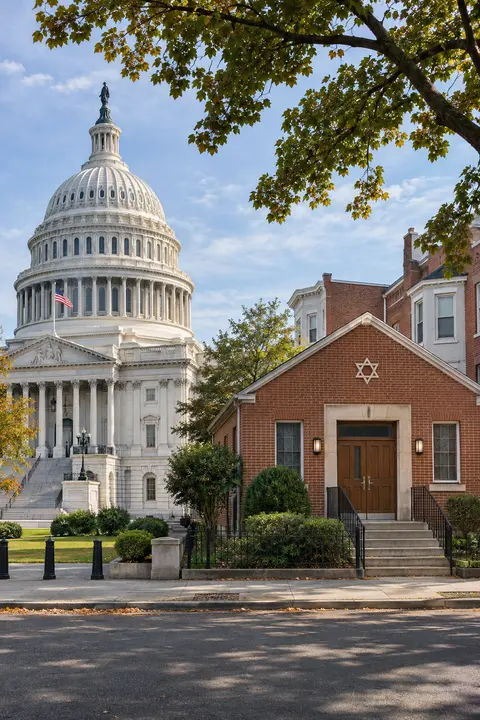
Since Tuesday’s midterm elections, a certain kind of post has been circulating on social media. One reads: “As a Jew, I am terrified of these newly elected antisemitic politicians that will be running our country after January. America is no longer safe for us Jews.”
The fear behind posts like this is real, and nobody should mock it. The last few years have given Jews in America reasons for concern, including attacks on synagogues and on Jews in the street. But fear is a poor guide to facts, and the claim in that post deserves a closer look, because it rests on an assumption that most people who repeat it have never examined.
What changed in the midterms
Several of the candidates who won this week, mostly in the House of Representatives, campaigned against American military aid to Israel or sharply criticized the Israeli government’s conduct of the war in Gaza. Some pro-Israel incumbents lost their seats. For many observers, that was the story of the election as it concerns Jews.
But what those facts actually describe is a disagreement about American foreign policy toward a foreign country. Whether the United States should send weapons to Israel, and on what terms, is a question Americans of every background argue about, Jews included. A congressman who votes against an aid package has taken a position on foreign policy. He has not taken a position against the Jewish family down the street.
The post above assumes that the two are the same: that a politician who opposes the State of Israel is, by definition, a threat to Jews. That assumption is the core of Zionism. It holds that every Jew in the world is bound up with a state in the Middle East that calls itself the Jewish State, so that criticism of the state is an attack on all Jews and the state’s fortunes decide the Jews’ safety. Torah Jews have rejected that idea since the movement began, and accepting it now, out of fear, hands the movement exactly what it has always claimed.
How to tell the difference
That doesn't mean antisemitism doesn't exist in politics. Sometimes it's real, and when it appears it should be called out. A politician who speaks with contempt about Jews as Jews, who blames “the Jews” for the actions of a foreign government, who uses “Zionist” as a polite word for Jew, or who will not condemn violence against Jewish people, has crossed a line. This publication has said so before and says so again.
The test is simple. Judge a politician by how he treats Jews, in his words and in his votes. That includes his own Jewish constituents, their synagogues, their schools, and their right to practice their religion in peace. Do not judge him by his position on Israel. A congressman can oppose military aid to Israel and still protect the yeshiva in his district. Another can support every aid package and still do nothing for the Jews he represents. The first may be a better friend to Jews than the second.
Mixing up the two does real harm. When every critic of Israel is called an antisemite, the word loses its force. Then, when real hatred of Jews appears, the warning sounds like one more political accusation and is easier to ignore.
What the record shows
The claim that “America is no longer safe for us Jews” also ignores history. In the long history of the Jewish exile, few countries have given Jews what America has: full citizenship, freedom of religion protected by the Constitution, courts that enforce it, and the freedom to build communities, schools, and yeshivos without asking anyone’s permission. Torah authorities of the last century called America a malchus shel chesed, a kingdom of kindness, and they meant it. And Torah Jews today still feel that way and are deeply thankful to this great country.
None of that was on the ballot this week. The Constitution is the same as it was on Monday. The courts are the same. A few hundred members of Congress were elected, as they are every two years, and in January they will join a government whose powers are limited by law, with checks on every branch. A handful of new members who disagree with the old consensus on Israel will not change the place of Jews in American life.
Who benefits from the fear
There is one more reason to be careful with posts like this one. “You are not safe where you live” has been the Zionist movement’s message to the Jews of the exile from its very beginning. Its founders argued that Jews could never truly belong anywhere but in their own state, and the movement has always gained when Jews abroad felt unwelcome. A Jew who decides, on the strength of a midterm election, that his country has turned against him is repeating that argument, often without knowing where it comes from.
The Torah gives a different instruction. When the prophet Jeremiah wrote to the Jewish exiles in Babylon, he told them to build houses, plant gardens, raise families, and “seek the peace of the city where I have caused you to be carried away captive, and pray unto the Lord for it.” Jews have followed that instruction for twenty-six centuries, under governments much worse than any that will take office in January.
What Torah Jews will do
Torah Jews in America will do this year what they did last year. They will keep the law of the land, deal honestly with their neighbors, and pray every Sabbath for the government of the United States, including the new members of Congress, whoever they are and whatever they think about Israel. They will watch carefully for real hatred of Jews and name it when they see it. And they will remember that the safety of the Jewish people has never depended on who wins an election, here or in Israel. It depends on God, Who has protected His people through every exile, and Who does not appear on any ballot.
The Balfour Declaration's Heavy Cost