Rabbi Aron Teitelbaum's Letter to President Trump
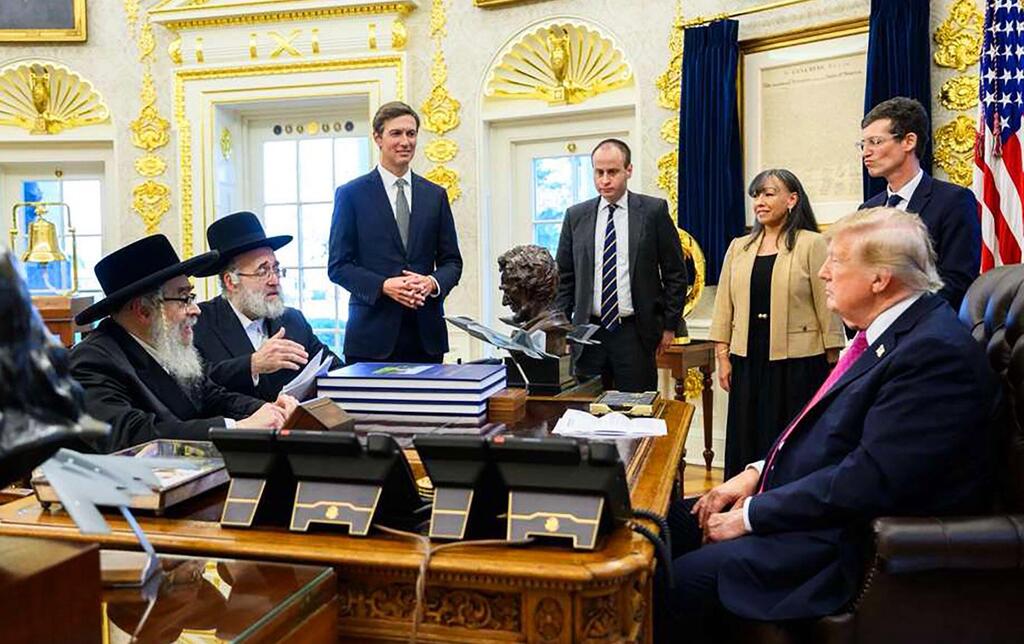
Below, @voiceofrabbis presents the "Cliff Notes" version of the letter the Satmar Rebbe, Rabbi Aron Teitelbaum, sent to President Trump. "Key quotations" are direct quotes from the letter. The rest is our summary. The letter was two pages long, with an additional two-page Appendix, containing documentation and sources for material cited in the letter.
The communication is valuable because it sets forth basic Orthodox beliefs about Jewish identity and its relationship to Zionism and the State of Israel. The letter was not intended to present every major theological or political objection to Israel; rather, it was limited to the points deemed most important to convey to the President at this time, including the claim that antizionism is antisemitism or itself a hate movement, along with other immediately pertinent issues. The letter does not necessarily reflect any additional items discussed in face-to-face talk with the President, privately or in the group.
1. Intro: Satmar is Asking for Recognition, Not Agreement
Satmar is not asking the President to become antizionist, accept Antizionist Jewish theology, or to change American policy toward Israel. It is asking the government to understand accurately what antizionist Jews believe and who has authority to speak for them. The rabbi’s political request should not be mistaken for a demand that the United States adopt its religious views. It is not. The request is essentially one of religious and civic self-definition: you do not have to agree with us, but you should not allow someone else to define us.
Key quotation: “I write as an Orthodox antizionist Jew. I ask only that our position be understood accurately.”
2. Jews are Not a Political Nationality
The foundation of the traditional Orthodox antizionist position (including but not limited to Satmar) is that Jews are united only by Judaism and the Torah, not by membership in a worldwide political nation. An American Jew is therefore an American citizen whose religion is Judaism, not a member of a foreign nationality whose political center happens to be Israel. This sharply distinguishes Judaism from Zionism, which defines the Jews as a national people with a desire for national political expression. A common misconception is that Antizionist Jews merely object to how the so-called Jewish state was created or believe that it was created too early. The message here is more fundamental: Antizionist Jews reject the premise that Jewish religious identity constitutes membership in a modern political nationality.
Key quotation: “What binds Jews together is only Judaism and the Torah—not a common political citizenship or national allegiance.”
3. Jews’ Bond With Other Jews Is Religious, Not Political
Antizionist Orthodox Jews nevertheless consider Jews throughout the world to be “brothers in faith.” Rejecting Jewish political nationality therefore does not mean denying Jewish communal responsibility. What it denies is the transformation of that religious relationship into a political nationality. An Israeli government decision does not become a “Jewish position” merely because most Israelis are Jewish, or because Israel claims to be the “Jewish state,” and disagreement with an Israeli policy does not amount to disagreement with Judaism or the Jewish people. This corrects another common misconception: denying that Jews are a political nation does not mean that Jews have nothing in common with one another. It means that the bond that unites them is religious rather than sovereign or political. In other words, it is not that the Jewish people created Judaism; the religion made us the Jewish people.
Key quotation: “We consider Jews everywhere our brothers in faith. But that does not turn the decisions of a foreign government into inherently Jewish positions.”
Classic Source: אין אומתינו אומה אלא בתורתה, “Our umah is not an umah except via its Torah.”
4. Israel is the state of the Israelis—not the State of the Jews
Because being Jewish does not make someone part of an Israeli political nation, Israel cannot acquire an association with Jews throughout the world simply by unilaterally declaring itself “the nation-state of the Jewish People.” We do not object to Israelis defining their own country as they choose; we object when that definition is extended outward to include Jews who never chose such an association. Furthermore, even if one would believe that Jews do constitute a nationality, an additional reason would be required to make Israel the political state of that nationality. The central distinction is between Israel’s right to define itself and its claimed right to define the Jewish people.
Key quotation: “Israel may define itself as its citizens choose, but it cannot define the Jewish people or determine their political identity.”
5. Zionism Represents Zionists—not “the Jews”
Antizionist Jews regard statements that Zionism is “the national liberation movement of the Jewish people,” or that an Israeli prime minister represents “the entire Jewish people,” as patently false claims that exceed the authority of Zionist institutions. Zionists may speak for themselves, their organizations, their voters, or their supporters; they cannot convert those constituencies into “the Jewish people.” Rabbi Joel Teitelbaum o.b.m. therefore considered it an important religious duty to tell the world that Zionists “are not the representatives of the Jewish people.” A common misunderstanding is that antizionist Jews are simply an unusually anti-Israel faction within the Zionist political conversation, particularly regarding Israel’s policies and actions. The point is precisely the opposite: We deny that Zionism has jurisdiction over the definition of Jewish identity in the first place, and consequently deny any association between us and the state of Israel.
Key quotation: “The Zionists ‘are not the representatives of the Jewish people, and...Torah-adherent Jews have no connection with them.’”
6. For an American Antizionist Jew, Israel Is a Foreign Country
This produces one of the letter’s strongest conclusions. Israel’s wars, borders, military strategy, settlements, diplomacy, and foreign relations are questions concerning a foreign government. Antizionist Jews do not frame the issue as, “Is the Jewish state doing good or bad?” because that question already assumes the connection antizionism rejects. The letter instead said that antizionist Jews such as Satmar have “no more political connection” with Israel than with Japan, Uganda, or another foreign country. This does not mean indifference to Jews living there; it means that concern for fellow Jews is not the same thing as political connection to their country.
Key quotation: “We have no more political connection with the State of Israel than we do with Japan, Uganda, or any other foreign country.”
7. The Holy Land and the State of Israel Are Two Different Things
The rejection of Zionism by antizionist Jews does not mean rejection of the Land of Israel. Eretz Yisroel is sacred in Judaism and occupies an extraordinary religious place in Jewish life. What antizionist Jews reject is the assumption that religious attachment to the land creates any political, national, or civic attachment to the state that happens to exercise sovereignty over it. The letter makes this concrete by comparing the modern Israeli government with earlier governments that ruled the Holy Land: British, Ottoman, and Mamluk sovereignty over Jerusalem did not make those governments representatives of Judaism. In the same way, Jewish sovereignty over the territory does not transform the state of Israel into the political embodiment of the Jewish people or the Jewish religion.
Key quotation: “Our religious attachment to the sacred land does not extend to the country that exercises sovereignty over it.”
8. This Is Also an Empirical Argument, Not Only a Religious Argument
The letter emphasizes that the argument is not merely religious. An American citizen who is not an Israeli citizen does not become an Israeli because of religion. From an ordinary civic standpoint, a foreign state normally represents its own citizens, not American citizens who happen to share a religious identity with much of its population. Additionally, most American Jews are not Israeli-Americans and have no Israeli citizenship or political status, yet Israel claims to be their state. We therefore argue that our objection to Israeli representation is both theological and empirical: Antizionist Jews are American citizens, not “Israelis in diaspora.”
Key Quotation: “Those of us who are not Israeli citizens are not Israelis in diaspora.”
9. Antizionist Jews Must Be Allowed to Speak For Themselves
This principle has a practical consequence: governments should not go to Zionist organizations to learn what antizionist Orthodox Jews believe or what their interests are. The letter invokes the earlier attempt of Jerusalem’s antizionist Orthodox community to obtain recognition during the British Mandate as a separate religious community. The modern request is similar in principle: Zionist and antizionist Jews must not be treated as interchangeable voices within one political constituency. Antizionist Jews are therefore rejecting representation through Zionist organizations.
Key quotation: “If your Administration wants to understand what antizionist Jews believe, it should hear directly from us.”
10. Conflating Jews With Israel Feeds Antisemitism
Antizionist Jews also see the distinction as protective. Two classic antisemitic ideas are that Jews possess divided loyalty and that Jews everywhere should be held responsible for the acts of other Jews or of Israel. If Israel is routinely described as acting in the name of, or even merely for, “the Jewish people,” the distinction between Jews and the Israeli government becomes harder to maintain. The letter therefore insists that criticizing, praising, rewarding, or condemning Israel should not automatically be transferred to Jews because they are Jews. Its claim is not simply that antisemitism exists, but that accurately distinguishing Jewish religious identity from Israeli and Zionist political identity helps prevent the logic of collective responsibility on which certain forms of antisemitism depend.
Key quotation: “So is holding Jews collectively responsible for the actions of the State of Israel.”
11. The Bottom Line: “Our Political Home Is the United States of America”
Antizionist Jews are asking the American government to deal with them as American citizens—not as representatives of Israel, dependents of Israel, members of an Israeli diaspora, or constituents of a worldwide political nation headquartered in Israel. Israel may speak for Israel, Zionist organizations may speak for Zionists, and Antizionist Jews will speak for themselves. The clearest statement of the message delivered to President Trump is therefore the letter’s concluding sentence: “Our political home is the United States of America.”
Key quotation: “Israel can speak for Israel. Zionist organizations can speak for themselves. They cannot speak for us, and they cannot define us.”
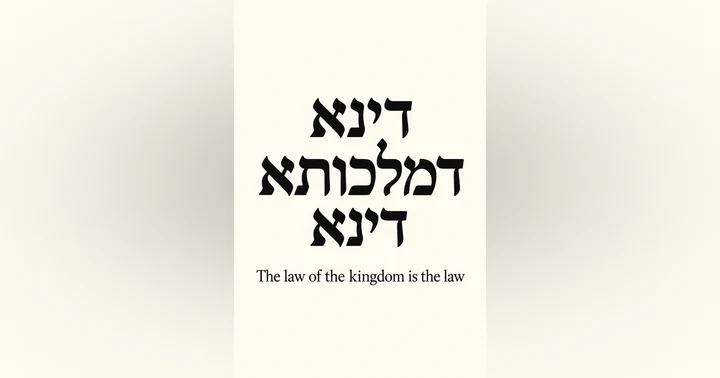
The Law of the Land Is the Law