The Assumption Nobody Examines
First in a new series, "The Two Thousand Year Argument," on what the Jewish people did with exile.
Most people carry a picture of Jewish history without ever having chosen it. The picture goes something like this. There were the Jews of the Bible, with their kings and their Temple. Then Rome destroyed everything, and for two thousand years the Jews were a scattered and helpless people, wandering from country to country, waiting and suffering, until 1948 finally ended the emergency and gave them a home again.
Almost everyone absorbs some version of that story. It shapes how people read the news, and it flatters a particular conclusion: that the long centuries were an empty parenthesis, and that a modern state was what finally rescued the Jews from them.
The story has one problem. It's entirely false.
What the record shows
Consider a few facts that rarely appear in the popular account.
The great Jewish academies of Babylonia, in what is now Iraq, operated for over a thousand years without interruption. Their heads answered legal questions sent from Jewish communities across three continents. They were running when Rome fell, still running when Islam arose, and still running when the first universities of Europe had not yet been founded.
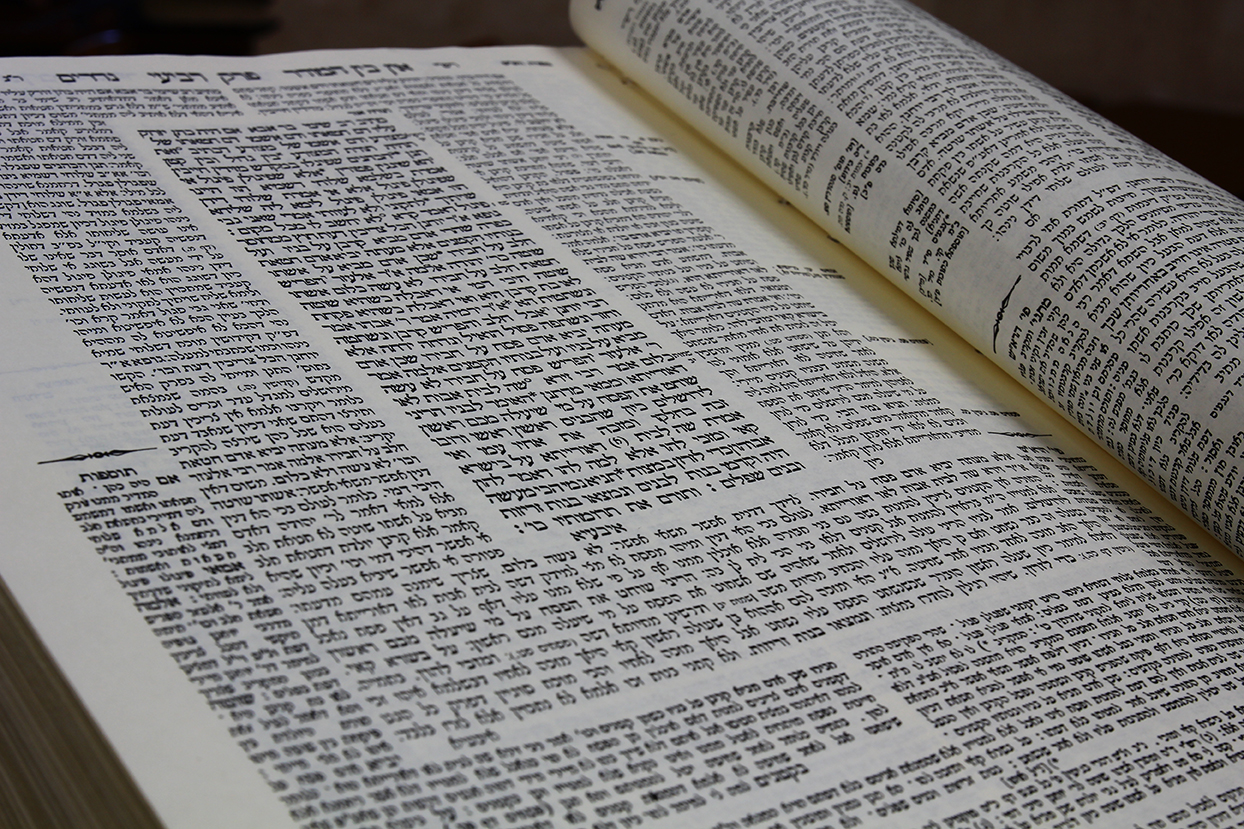
During those same centuries of supposed helplessness, the Jewish people produced the works that observant Jews study every day now: the Talmud, the great commentaries, the codes of law that govern Jewish practice down to the smallest detail. Open a page of Talmud in a study hall in Brooklyn tonight and you are looking at a text written down in Babylonia, far from Jerusalem, by scholars living under foreign rule.
Jewish communities have governed themselves for the past two thousand years across the whole known world with no army, no police force, and no prisons, and their law was kept anyway. A merchant in Cairo and a scholar in Cologne followed the same legal system of the Torah, with no telephones and no central government to enforce anything.
Whatever else that is, it is not a coma. It is not a people sitting in a waiting room.
The thing that never changed
You may wonder whether the Judaism of those centuries was some new, improvised version of the original, a religion rebuilt after the Temple burned. It was not, and this point matters enough to state clearly before we go any further.
Judaism holds that the Torah given at Sinai came in two parts, the written text and the oral teaching that explains it, and that both were given together. The oral teaching always contained the laws for every situation the Jewish people would face, including the loss of the Temple and the long dispersion that Scripture itself warned would come. When the Temple stood, the laws of the Temple were performed. When it fell, those particular commandments went dormant, waiting for the Temple to be rebuilt, and the rest of the Torah continued exactly as before.
Prayer is one of the clearest examples. The daily prayers correspond to the daily offerings, and the tradition teaches that this correspondence is not a substitute invented in a crisis; it is the arrangement the Torah itself provides for when offerings cannot be brought. The sages of the generations after the destruction did not design a new religion for new conditions. They applied the religion they had received, under conditions it had always anticipated. The same Sabbath, the same festivals, the same laws of family and food and honesty in business, the same Torah, in Jerusalem or in Babylonia or in Poland.
That continuity is the reason the rest of this series is possible. A people carrying an unchanged inheritance through changing empires can be tracked across the centuries, and the record can be checked.
What exile actually was
If the two thousand years were not an accident and not an emergency, what were they?
In the Jewish understanding, the exile was a decree. Scripture states the terms directly: the land was given on conditions, and when the conditions were broken, the people would be removed from it. Jews have said so in their own prayers, every festival, for as long as anyone can remember. Because of our sins we were exiled from our land.
That belief carries a consequence most outside observers have never considered. If God sent the exile, then the exile has a purpose, and living in it correctly is itself the assignment. Not "enduring it" while waiting for real life to resume. Living it. The task was to keep the Torah wherever they landed, to build communities and schools, to raise children who would keep it after them, and to wait for God to end the exile as He had begun it.
Once that is understood, the achievements above stop looking surprising. A people who believed they had work to do simply got on with their work.
Why this series exists
This publication has spent a long time arguing that Zionism, a nationalist movement born in nineteenth-century Europe, is not Judaism. That argument has always had a missing half. It is one thing to say what Judaism is not. It is another to show a reader what it is, and what its people actually did with two thousand years.
That is the purpose of this series. Over the coming articles we will follow the Jewish people through those centuries: the choice made while Jerusalem burned, the legal system that ran without a government, the golden ages in Babylonia and Spain and Poland, the communities that lived in the Holy Land the whole time without ever founding a state, and the theology that explains why a people who prayed for return three times a day declined to seize it by force.
We will also look, near the end, at how this history came to be forgotten, and at who found it useful to forget.
But the first step is simply to set down the assumption. The Jews of the exile were not waiting to be rescued. They were the most successful stateless civilization the world has ever seen, and they built it with books.
The Law of the Land Is the Law