The Satmar Rebbe: The Jewish Leader Who Refused to Follow the Crowd
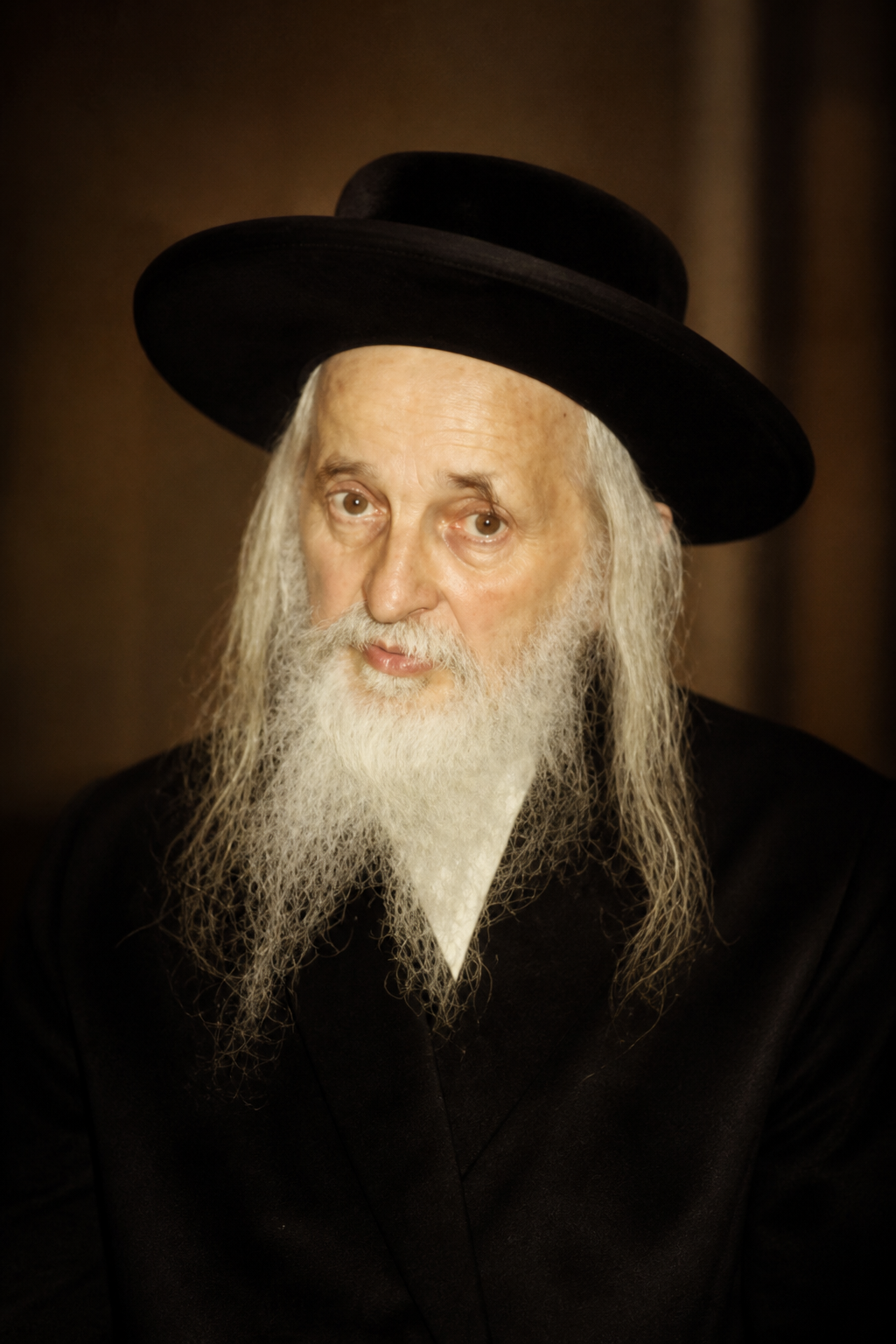
Today marks the anniversary of the death of Rabbi Joel Teitelbaum, better known as the Satmar Rebbe, one of the most influential Orthodox Jewish leaders of the twentieth century.
To much of the outside world (and even among Jews), the Satmar Rebbe is remembered primarily for one thing: his fierce opposition to Zionism and to the creation of the State of Israel. That position has often caused him to be portrayed as an extremist or a fringe figure, far removed from mainstream Jewish life.
But that picture is badly distorted.
Rabbi Teitelbaum was one of the great builders of Jewish religious life after the Holocaust. He was a formidable Torah scholar and a leader whose influence extended far beyond his own followers. The community he rebuilt after World War II grew into Satmar, today one of the largest Hasidic movements in the world.
And the feature of his life that is most often used to marginalize him, his opposition to Zionism, cannot be understood without recognizing what motivated it.
The Satmar Rebbe did not oppose Zionism because he hated Jews. He opposed it because he believed it was leading Jews away from their true identity. His anti-Zionism was inseparable from his love for the Jewish people.
Rebuilding After the Holocaust
The Satmar Rebbe emerged from a Jewish world that had been almost completely destroyed.
Before the World Wars, Eastern and Central Europe contained an enormous network of traditional Jewish communities, religious schools, academies, synagogues, charitable organizations and communal institutions. The Holocaust destroyed much of that civilization along with the millions of Jews who inhabited it.
Rabbi Teitelbaum survived and eventually came to the United States. There he faced a question confronting many surviving Jewish religious leaders: Could the intensely religious Jewish life that had once existed in Eastern Europe be rebuilt in modern America?
His answer was an emphatic yes.
He established schools, synagogues, religious academies, charitable organizations and the infrastructure necessary to sustain an entire community. Satmar grew dramatically. Today its communities number tens of thousands of families, with major population centers in New York and communities elsewhere around the world.
Whatever one thinks of the Satmar Rebbe’s political and theological views, his role in rebuilding Orthodox Jewish life after the Holocaust is difficult to overstate.
But his goal was not merely to preserve the outward practices of the Jewish religion. He wanted to preserve the proper understanding of what the Jewish people actually are.
And that is where his opposition to Zionism became so important.
A Fundamental Disagreement About What a Jew Is
To understand the Satmar Rebbe’s position, one first has to understand that Zionism and Judaism are not synonymous.
Zionism arose as a modern political movement in Europe in the late nineteenth century. Its central contention was that Jews constitute a nation in the modern political sense and that they should should establish a sovereign state of their own in order to cement that identity.
For the Satmar Rebbe, this represented a profound departure from the traditional Jewish understanding of Jewish identity.
The Jews were not an ethnic or national group seeking political self-determination. They were a people bound to God through the Torah. Their survival through nearly two thousand years of exile was not dependent upon possessing a state, an army or political sovereignty. Their identity rested upon a religious covenant.
He therefore recognized the Zionists' attempt to redefine Jews as a modern nationality as something far more consequential than a political disagreement. It represented an effort to fundamentally change what it meant to be Jewish.
That conviction explains the intensity of his opposition.
Why He Fought So Hard
It is sometimes assumed that the Satmar Rebbe’s fierce rhetoric against Zionism reflected hostility toward Jews who embraced it.
But that interpretation ignores the larger pattern of his life.
This was a man who devoted himself to rebuilding Jewish communities, educating Jewish children, supporting Jewish families and providing charitable assistance on an enormous scale. His life’s work was centered on the survival of the Jewish people and their religion.
His opposition to Zionism came from that same sense of responsibility.
Think of a father who sees his child heading down a road that he knows will end badly. A loving father does not remain silent simply because the child does not want to hear his warning. He may argue. He may plead. He may become angry. If he believes the danger is serious enough, he will cry out in anguish.
The strength of his reaction does not demonstrate an absence of love. It can demonstrate precisely the opposite.
That is how the Satmar Rebbe understood his responsibility toward his fellow Jews.
He saw that Zionism was taking the Jewish people down a road to destruction. Remaining silent would have been the easier choice, but hardly the more loving one.
Standing Against an Overwhelming Consensus
The courage required for that position is also easy to underestimate today.
In the aftermath of the Holocaust and the establishment of Israel in 1948, Zionism acquired enormous emotional power throughout much of the Jewish world. For many Jews, the creation of a Jewish state after centuries of persecution seemed to vindicate the Zionist project.
Rabbi Teitelbaum refused to be swept along.
He did not believe that political success could determine religious truth. Nor did he believe that an ideology became compatible with Judaism simply because large numbers of Jews embraced it.
It would have been far easier for him to soften his position. He could have concentrated on building his own community and ignored what was happening elsewhere. Instead, he wrote, taught, and spoke publicly because he believed a religious leader had a responsibility to say what he believed was true, regardless of its popularity.
More Than an “Anti-Zionist Rabbi”
Reducing the Satmar Rebbe to the label “anti-Zionist” therefore misses the larger story.
He was a builder.
He helped reconstruct a religious world that had nearly been annihilated. He created institutions that continued long after his death. He established a community whose extraordinary growth demonstrates just how successfully he transmitted his beliefs to succeeding generations.
And even his anti-Zionism was ultimately about building and preserving.
He wanted Jewish children to understand Judaism as a relationship with God rather than primarily as membership in a nationality. He wanted Jews to understand the Torah, rather than a government or territory, as the foundation of their collective identity. And he feared that attaching Judaism to the actions and fortunes of a modern state would fundamentally distort both Judaism and the way Jews were perceived by the rest of the world.
The Courage to Be Misunderstood
There are leaders who become great by expressing what their generation already believes. Others become great because they are willing to challenge their generation when they believe it has gone terribly wrong.
The Satmar Rebbe belonged to the second category.
He knew his position would make him controversial. He knew that opposing an ideology embraced by millions of his fellow Jews would expose him to ridicule and condemnation. He knew that his motives could easily be misunderstood.
He spoke anyway.
On the anniversary of his death, it is worth remembering the whole man rather than the caricature: a survivor who rebuilt from the ashes of the Holocaust, a religious leader who helped create one of the largest Hasidic communities in the world, and a man who felt an extraordinary responsibility for the spiritual future of his fellow Jews.
His opposition to Zionism did not come from standing apart from the Jewish people.
He fought because he believed the Jewish people were his responsibility.
He fought so fiercely because he cared so deeply.
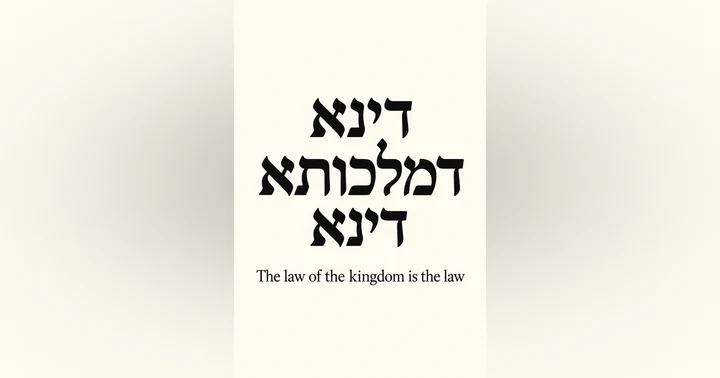
The Law of the Land Is the Law