Three Years On
Last week marked three years since October 7, 2023. On that morning, more than 1,200 people were murdered in southern Israel, and 251 were carried off as hostages. Families were killed in their homes. Elderly men and women, small children, and infants were taken across the border into Gaza.
It happened on Simchas Torah, the day each year when Jews around the world carry the Torah scrolls in circles and dance with them, celebrating the completion of the yearly reading and its beginning again. It is the most joyful day of the Jewish calendar. In many synagogues that year, the news arrived in the middle of the dancing.
Three years later, nothing about that day has become easier to describe.
Who mourned
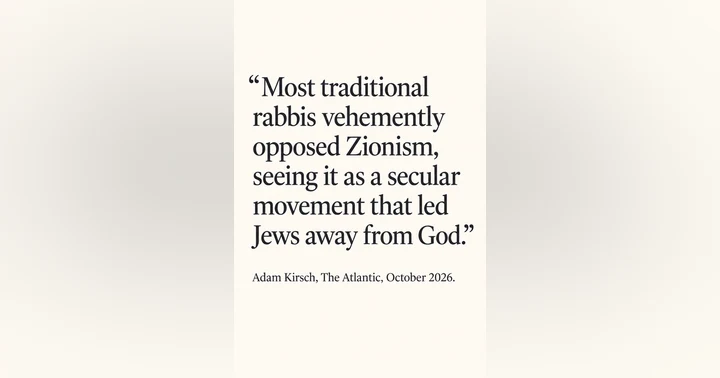
Readers of this publication know that the Torah communities it speaks for have opposed Zionism since the movement began, on religious grounds, and still do. It is worth saying clearly, on this anniversary, what that opposition has never meant.
It has never meant indifference to Jewish lives. When the news came that morning, it reached Jews of every kind at once, and they responded the same way. In Jerusalem and Bnei Brak, in Williamsburg and Lakewood, in Stamford Hill and Antwerp, in communities that want nothing to do with the state and say so openly, people stopped what they were doing and said Tehillim, the Psalms that Jews turn to in times of trouble. They prayed for the wounded and for the hostages, by name, for months. They cried for people they had never met.
None of that grief came from a political position. It came from something much older, the bond that makes the Jewish people one family no matter where its members live or what they think. The people murdered on October 7 were Jews, killed because they were Jews, and they were mourned as brothers and sisters by Jews who agree on almost nothing else. That bond does not depend on a state. It existed for thousands of years before one, and it would be just as real without one.
The other grief
There is a second grief that belongs in any honest reflection on these three years, and it has nothing to do with politics.
In the war that followed, a great many Palestinians were killed in Gaza, among them enormous numbers of women and children, and most of Gaza's population lost their homes. A person does not need a position on borders, governments, or the conduct of a war to be heartbroken by that. The Torah teaches that every human being is created in the image of God. The death of a child in Gaza is a sorrow, as the death of a child in a kibbutz is a sorrow, and grieving for one does not take anything away from grieving for the other.
This publication takes no position on the Israeli-Palestinian conflict, and that is a deliberate choice, not an evasion. The Torah does not require a Jew to have an opinion about the policies of the State of Israel or the claims of its enemies, any more than it requires him to have an opinion about the politics of any other country. The demand that every Jew declare a side, for the state or against it, rests on the idea that Jews and the state are one thing, and that idea is the founding claim of Zionism. Refusing the demand is the simplest way of refusing that claim. What a Jew does owe is what every human being owes: compassion for the suffering, and prayer for an end to it.
Three years of the equation
One more thing about these three years needs to be said, because it is still happening.
Since October 7, Jews far from Israel have been targeted again and again because of a war they did not fight. Synagogues have been attacked. Jewish ambulances were set on fire in London. A Jewish man was stabbed on a New York street this summer. Children in Jewish schools have been taught to watch for danger on the way home. The people who carried out these attacks were acting on the same belief as the attackers of October 7: that any Jew anywhere stands for the State of Israel and can be made to pay for it.
That belief is false, and it is dangerous for Jews from whichever side it comes. A Jewish family in Manchester or Montreal is not a party to the war. Mourning the murdered of October 7 honestly includes refusing the logic that turns a Jew walking down a New York street into a target.
What remains
Three years on, many of the families of the murdered are still in mourning, the families of the hostages carry what they lived through, and families in Gaza are grieving their own dead. All of them are human beings who did not choose the catastrophe that fell on them.
The Torah's response to such suffering has always been the same. Jews pray. They ask that God comfort the mourners, heal the wounded, and bring an end to the killing, and that He resolve what human beings have not been able to resolve, in His way, without harm to anyone. That prayer was said in synagogues on the morning of October 7, and it has been said every day since.
May the memory of the murdered be a blessing, and may all who mourn be comforted.
Formidable