Judge the Mayor as a Mayor
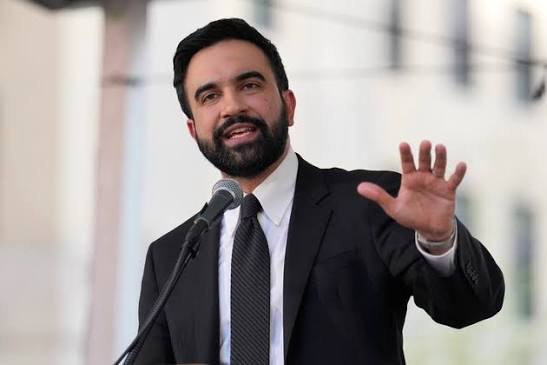
New York City is having a very loud summer. In July, Mayor Zohran Mamdani released a video announcing that he had no authority to arrest Benjamin Netanyahu under the International Criminal Court's warrant, calling on the federal government to do it, and declaring the Israeli prime minister "not welcome in New York City." The video was viewed tens of millions of times. Rallies followed on the Upper West Side. A petition now asks the governor to remove the mayor from office. And through all of it runs one word, repeated in statements, at podiums, and on signs: antisemite.
This article passes no judgment on Mamdani as a mayor. Whether his policies are good for New York, whether his administration protects its citizens well or badly, whether his rhetoric about a foreign war is wise or reckless for a man in his office: those are questions for New Yorkers, and nothing here answers them. This article has exactly one subject, the difference between the State of Israel and the Jewish people. The storm around the mayor has carried that subject into the largest Jewish city in the world.
The fear is real
Start where every honest treatment of this moment has to start. In late July, a Jewish man was stabbed on the Upper West Side. The city's own police commissioner has reported hate crimes rising, with a majority of them targeting Jews, who are a tenth of the city's population. Jewish New Yorkers describing fear are not imagining things, and some of what circulates in the movements around the mayor has included imagery and slogans aimed not at a state but at Jews. The standard applied here is simple: when hostility lands on a synagogue, a schoolchild, or a man on 86th Street, it has stopped being politics, whatever vocabulary it uses. Nothing below softens that.
The question is what follows from the fear. And the answer the community's loudest voices have chosen is the one this article exists to challenge.
What the charge actually claims
Listen carefully to the accusation. The mayor's video attacked a head of government, by name, over the conduct of a war, and invoked an international arrest warrant. His record before that is of the same kind: opposition to Israel's policies, to its current government, and to Zionism as a political project. One may find all of it wrong, offensive, or beneath the dignity of his office. But every word of it is directed at a state and its leadership.
To call that antisemitism, the charge has to assume a premise: that the state and the Jews are the same thing, so that opposing the one is hating the other. That premise is the problem. Without it, the mayor is a politician with a position on a foreign country, to be argued with like any other. With it, any criticism of Israel, from anyone, becomes an attack on every Jew in New York.
And that premise has a history. It is the founding claim of Zionism itself, an idea imported from nineteenth-century European nationalism: that the Jews are a nation, the state is that nation's expression, and the two cannot be told apart. The people shouting antisemite at the mayor believe they are defending the Jews. They are actually enforcing Zionism's central doctrine, and handing it a megaphone.
Who the charge convicts
Here is the test that shows what the accusation is worth. If opposing Zionism and condemning Israel's government is antisemitism in itself, then the charge convicts all the great rabbis of Europe who opposed Herzl from the first day. It convicts the Satmar Rebbe, who built the largest Chassidic community in the world, and who taught that Zionism is a rebellion against the Torah. It convicts the Orthodox Jews who stood outside the anti-Mamdani rally in July as counter-protesters, in their long coats, precisely because they reject Zionism on religious grounds. Any definition of Jew-hatred that convicts the most intensely religious Jews in New York cannot be taken seriously.
The mainstream Jewish debate is not-so-quietly conceding the point. Community voices to the left and right are now arguing over whether the mayor's rhetoric is antisemitic in effect rather than intent, and even establishment watchdogs have begun saying aloud that the conflation of Jews and Israel is among the most serious problems Jews face, and that Jews must notice their own share in the conflating. Those are careful words for a plain truth. The equation is the problem. It does not become the solution when Jews assert it.
The equation is the danger
Now connect the fear to the charge, because the connection runs the opposite way from the one being claimed.
The man on 86th Street was not endangered by a video about Netanyahu. He was endangered by a world in which a Jew walking to lunch is treated as an outpost of a foreign state, answerable for its wars. That world was not built by one mayor. It was built over a century by the doctrine that Jew and state are one, taught by the state itself, and now recited back by every attacker who makes a Jew in New York pay for events in Gaza. A Jewish community that responds to this moment by insisting, at rally after rally, that opposition to Israel is hatred of Jews, is not dismantling that doctrine. It is certifying it, in public, with its own signatures, and every antisemite in the city is taking notes.
The correct move, and the truth, is to break the equation:
- A Jew in New York owes no one a position on Israel as the price of his safety or his name.
- And the mayor's position on Israel, whatever one thinks of it, is not a position on the Jews of his city.
What may rightly be demanded
None of this leaves the mayor unaccountable, and the distinction cuts in his direction too. New York's Jews may demand of this mayor what they may demand of any mayor: safety, equal protection, unhesitating condemnation and prosecution when Jews are attacked, and vigilance about the line his own political camp is most tempted to cross. When a protest arrives at a synagogue instead of a consulate, when a cartoon reaches for the old imagery, when the word Zionist is plainly doing duty for the word Jew, a mayor whose politics are anti-Zionist carries a special obligation to say so first and loudest, precisely because the conflation is everywhere and his movement is not immune to it. That is the standard: judge the mayor as a mayor, on what his city does for and to its Jews.
What may not be demanded of him, or of anyone, is agreement with a state as proof of decency toward a people. The community that insists on that test should look hard at where the test came from. The answer is documented at length in this publication's series on the origins of Zionism. It came from the movement that needed Jew and state to be inseparable, and it has never protected the Jews. It has only ever endangered them.
Why They Waited