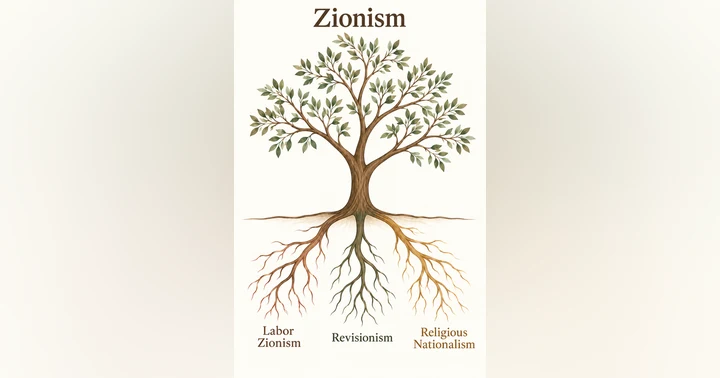
The Owners of the Place
A companion to our series on Zionism, Judaism, and why the difference matters.
Yesterday was Tisha B'Av, the fast described in this series' previous article, the day Jews spend on low stools mourning the destroyed Temple.
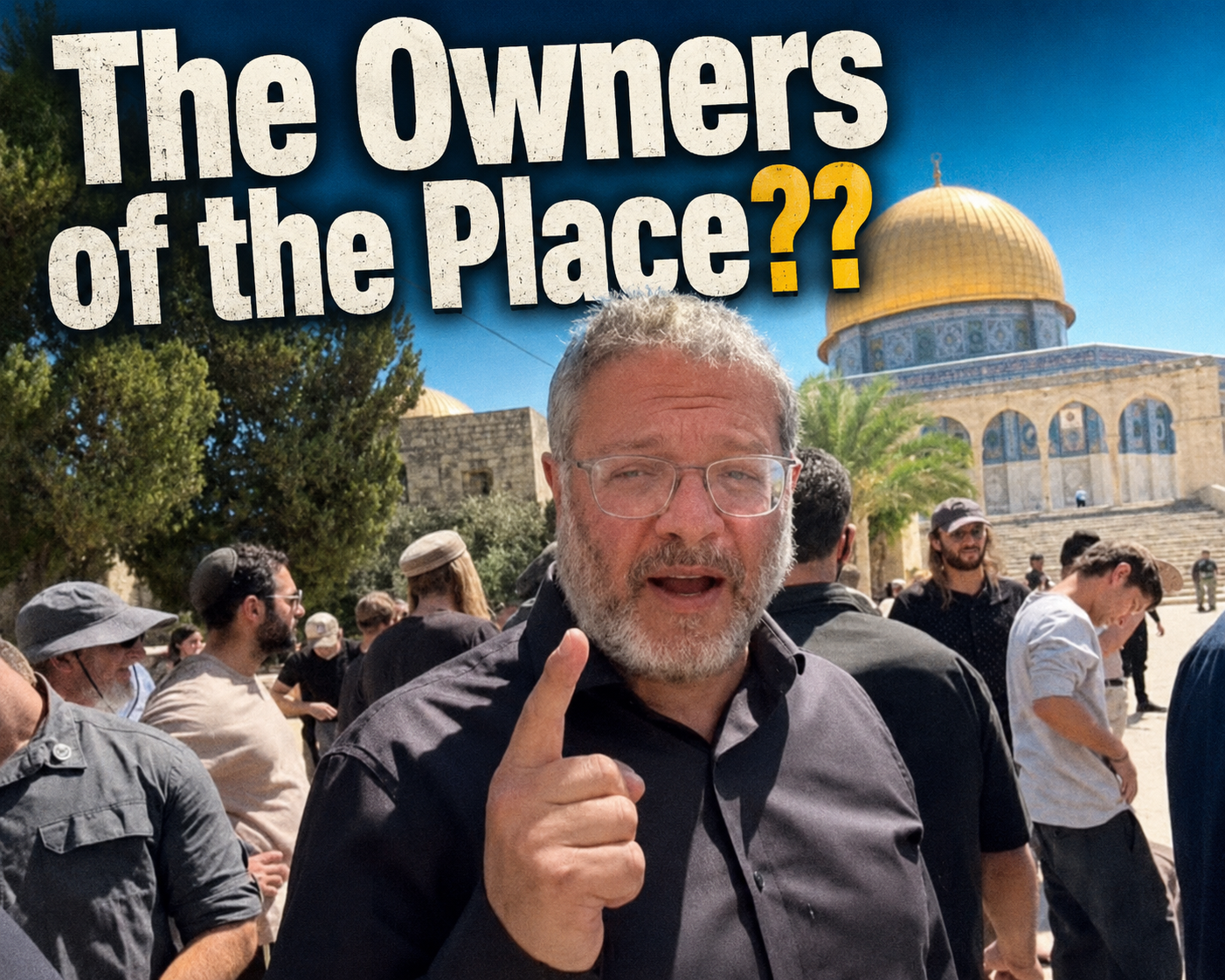
By midday, some three thousand Jews had ascended the Temple Mount itself, the Jerusalem hilltop where that Temple stood and where the Al-Aqsa Mosque compound stands today. Israel's National Security Minister, Itamar Ben-Gvir, went up with them. Some in the crowds prayed openly, in defiance of the longstanding arrangement that permits Jews to visit the compound but not to pray there. Ben-Gvir filmed a video on the Mount celebrating the scene: "Jews praying, feeling like they're the owners of the place." The day of mourning, he suggested, was being answered by progress.
The condemnations arrived on schedule from Jordan and the Palestinian religious authorities, and the coverage framed the event the way it frames every Temple Mount story, as a collision between Jewish worshippers and Muslim custodians. Readers could be forgiven for concluding that the only people objecting were Muslims and diplomats.
But the oldest objection comes from somewhere else entirely. It comes from Jewish law, which forbids those crowds to be up there at all.
The law almost nobody outside knows
Here is what the news accounts never explain. Jewish law holds that every Jew today carries a ritual impurity contracted, directly or indirectly, from contact with the dead. In Temple times there was a remedy, a purification rite involving the ashes of a red heifer, but that rite has been unavailable for nearly two thousand years. The impurity therefore cannot be removed, and a Jew who enters the sanctified area of the Temple Mount while carrying it violates one of the gravest prohibitions in the Torah. The stated penalty is kareis, usually translated as the soul being cut off, the severest consequence in the Torah's entire inventory. This is why, for centuries upon centuries, Jews simply did not go up. They prayed at the Western Wall below, as close as the law allowed, and no closer.
None of this is an anti-Zionist reading invented for polemical purposes. The Chief Rabbinate of the State of Israel has maintained the prohibition since the state captured the site in 1967, and a sign at the entrance has long announced, in the Rabbinate's name, that Jewish law forbids Jews to enter. The state's own highest rabbinic authority prohibits the act that the state's own cabinet minister stood on the Mount to celebrate. A reader needs no theology to notice that something has come apart.
Honesty requires one clarification. In recent decades, some rabbis within the religious-Zionist movement have permitted ascending outer portions of the compound after ritual immersion, following calculated routes said to avoid the sanctified core. Their position exists and their followers rely on it. But the older consensus, the practice of every Jewish community for thousands of years and the standing ruling of the Rabbinate today, remains what it was. What changed is not the law. What changed is the arrival of a movement for which the mountain's meaning changed, and that is the real story here.
What "owners" reveals
Listen again to the minister's chosen words: Jews feeling like the owners of the place.
Of every site on earth, the Temple Mount is the one Judaism most emphatically teaches that Jews do not own. It is the palace of the King. It belongs to God, is entered on God's terms, and God's terms at present are that no one enters. The law of impurity discussed above is simply that teaching in legal form. Holiness, in Judaism, is a boundary, and reverence means trembling at the threshold. All Jews throughout the generations understood that standing below the Mount, rather than upon it, was not a humiliation. It was the required observance.
Ownership is the other religion's category. This series has traced, step by step, how Zionism replaced the covenant with the nation and the palace with the homeland, transforming land from a trust held on conditions into a title held by right. To Zionists, the Mount is a national asset, presently under-utilized, and ascending it in force is simply an act of repossession. The minister said it precisely. The crowds went up to feel like owners, and feeling like an owner is the one feeling the place was designed to forbid.
The timing completes the picture. Tisha B'Av mourns, among other things, what the sword brought upon Jerusalem, and it mourns as exiles even in the state's capital, as the previous article described. To choose that day for a triumphal ascent, and to announce that the mourning is being overtaken by progress, is to answer the fast's theology directly: your exile is finished because we say so, and here is our flag as the evidence.
Eighteen centuries of Jews wept at the bottom of that mountain. Yesterday's crowds went up it to celebrate. Both cannot be practicing the same religion. In fact, they are not.
Which Jews were missing
One detail deserves more attention than any headline gave it. The most intensely religious Jewish communities in Jerusalem, the ones who keep every letter of the law the crowds claimed to honor, were not on the Mount yesterday. They were in the synagogues below, fasting on the floor, precisely because their fidelity to Jewish law keeps them off that hilltop. The people the coverage calls Jewish worshippers ascended in violation of the ruling of the state's own rabbinate; the people most devoted to Jewish worship stayed away. Any framework in which that sentence makes sense has stopped describing the same religion.
Many of yesterday's climbers surely believe themselves devout, and that is the tragedy rather than the refutation. A century of the ideology this series has documented has taught a generation that the national project is the faith, that sovereignty is sanctity, that planting a flag is a form of prayer. Where the two systems conflict, the state's category wins, and yesterday it won at Judaism's holiest site, on Judaism's saddest day, over Judaism's own explicit law.
So when the headlines report that Jews stormed the compound, a careful reader now knows what the headlines do not say. Judaism was not up on that mountain yesterday. Judaism was down below, on a low stool, keeping the boundary and mourning, among other losses, the ease with which its name gets borrowed.
A Prayer for the Government